
Environmental Engineering (STEM the Gap Edition)

Updated: Jun 28, 2025
Over 2 billion people don’t have access to clean drinking water. Each person generates over 4 pounds of trash daily, and approximately 8 million tons of plastic end up in the ocean annually. These numbers aren’t fiction—they’re our reality.
We kicked off our latest STEM the Gap session with a lesson on environmental engineering, introducing the girls to the people who protect our planet through science and design. Environmental engineers play a crucial role in keeping our water, air, and land clean. They develop systems that purify drinking water, reduce air pollution, and safely manage waste—all to protect the Earth and keep people healthy.
The girls explored how environmental engineers solve real-world problems using creativity and innovation. From cleaning up oil spills to building rain gardens and using solar energy, these engineers help fight climate change and safeguard nature. Their work makes a lasting impact on both the environment and our communities.
The future depends on bright, bold thinkers—and we’re proud to help spark that curiosity in the next generation.
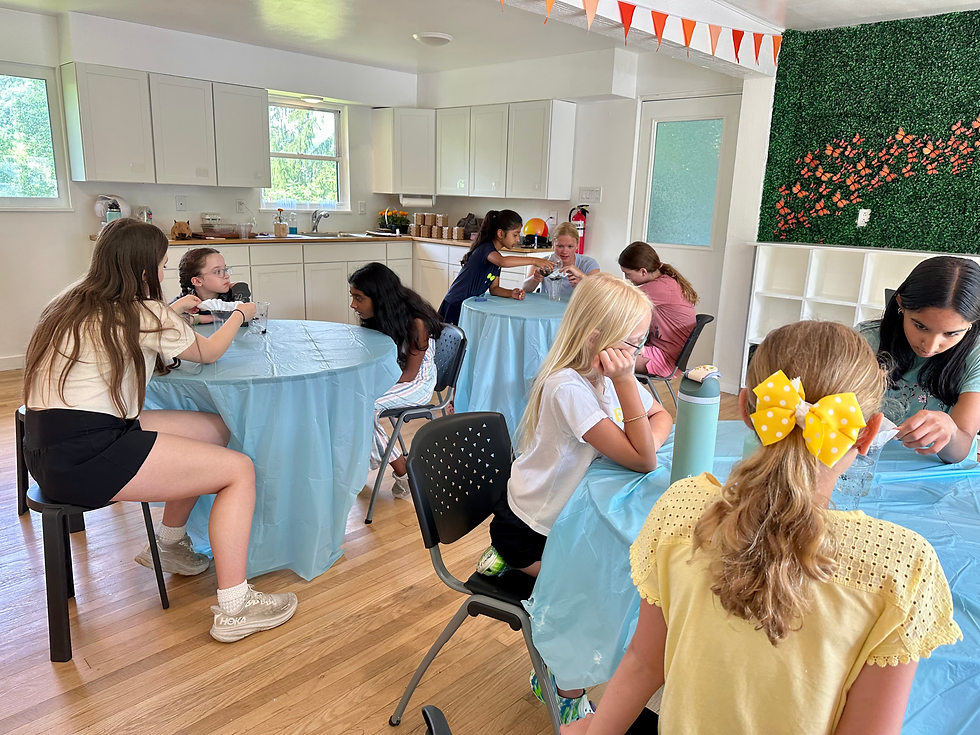
After the lesson, it was time for the fun part—hands-on activities!
The girls took on their first challenge: figuring out what happens to all the rainwater in a place like Pittsburgh. It has to go somewhere, right? That’s where rain gardens come in. These gardens are specially designed to hold runoff water so it can slowly soak into the ground or evaporate, reducing flooding and pollution.
Using materials like soil, sand, and gravel, the girls designed their own mini rain gardens and tested which combinations could hold the most water. Through trial and error, they explored how environmental engineers utilize natural systems to address significant problems.
Then, the fun activity: planting flowers! Plants are crucial for our survival. After all, they are the ones producing oxygen for us to breathe. We planted our flowers into custom, laser-cut cardboard pots, a perfectly sustainable way to reuse cardboard and grow new life.

After planting their flowers, it was time to go home. Each girl had a great time at this STEM the Gap session. We hope to see them (and YOUR future innovator) at our next session!
Great work!